

The enterprise AI market is crowded, with new copilots and chatbots promising productivity gains every week.
But enterprises don’t run on demos. They run on software systems, cloud infrastructure, data platforms, and regulated workflows that demand reliability, governance, and control. This is where many AI initiatives stall.
At Relevance Lab, we chose a different path. Instead of building generic AI tools, we focused on our core strengths — software engineering, cloud, data, DevOps, and platform development.
The result: engineering-grade, domain-specific GenAI agents embedded directly inside enterprise operating systems.
Not layered on top.
Embedded.
Our Approach: Anchor Customers + AI Pods
Every GenAI agent we build starts with:
- A real enterprise problem
- A committed anchor customer
- A clear business case
We co-invest through focused AI Pods, collaborating closely with customers to engineer production-grade solutions. Our Generative AI development services help enterprises build custom GenAI agents tailored to complex engineering problems and business workflows.
Once proven, these patterns are replicated across similar enterprises.
This is not demo-driven AI. This is platform-embedded intelligence.
The Agentic Enterprise Lifecycle
Based on lessons in our own GenAI product engineering journey, we see modern enterprises operating in a continuous loop:
Build → Ingest → Reason → Regulate → Operate → Learn
Relevance Lab’s GenAI agents are embedded across each stage of the lifecycle — not as overlays, but as system-level intelligence.
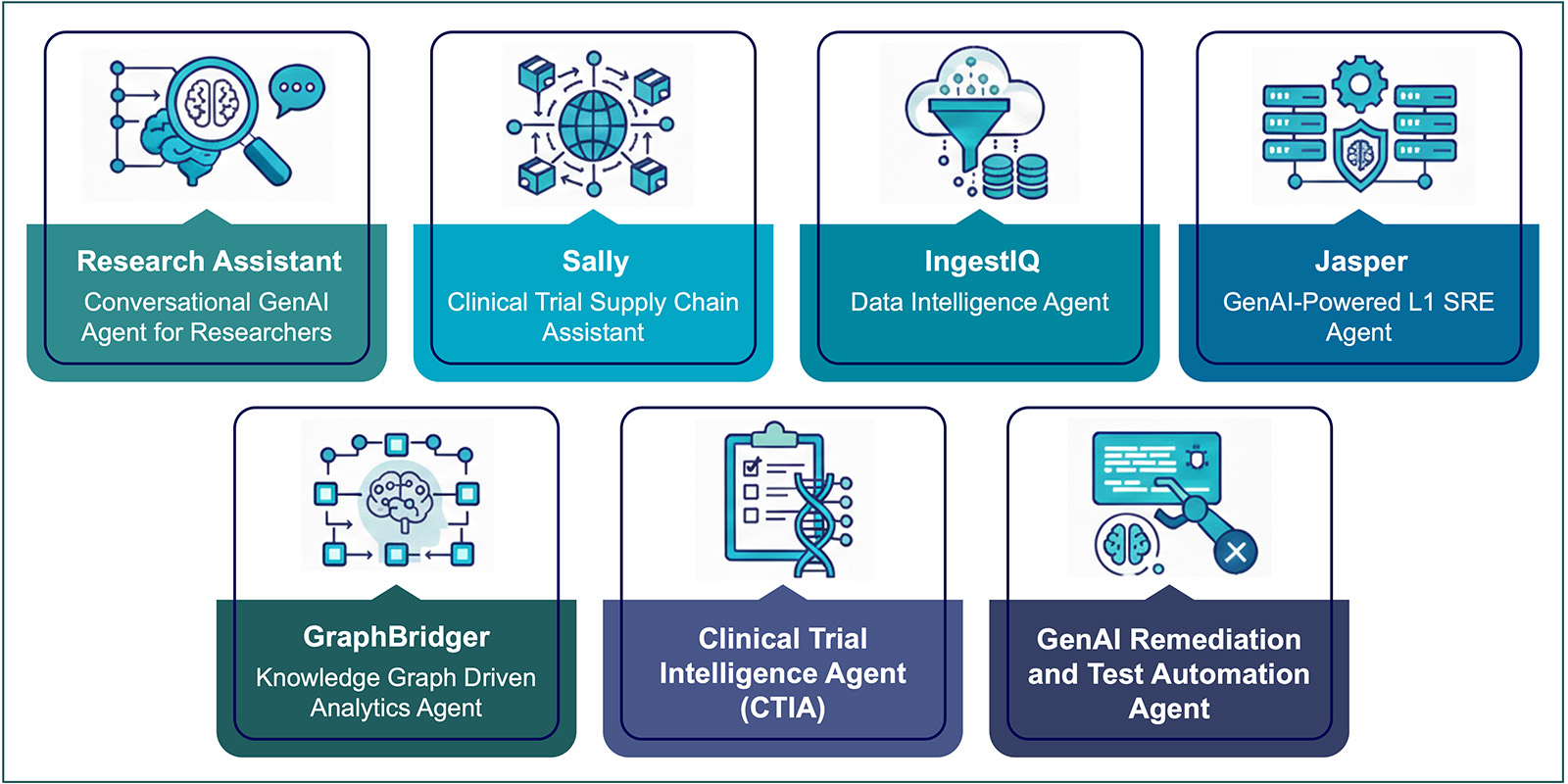
Research Assistant
Conversational GenAI Agent for Researchers
Research environments are fragmented across repositories, HPC systems, budgets, and compliance tools. Generic AI retrieves content — it cannot navigate governance and operational telemetry simultaneously.
Research Assistant embeds a cognitive automation layer into the Research Gateway platform, delivering:
- Context-aware enterprise Q&A
- Multi-source retrieval
- Capacity and FinOps insights
- Role-based governance and anomaly detection
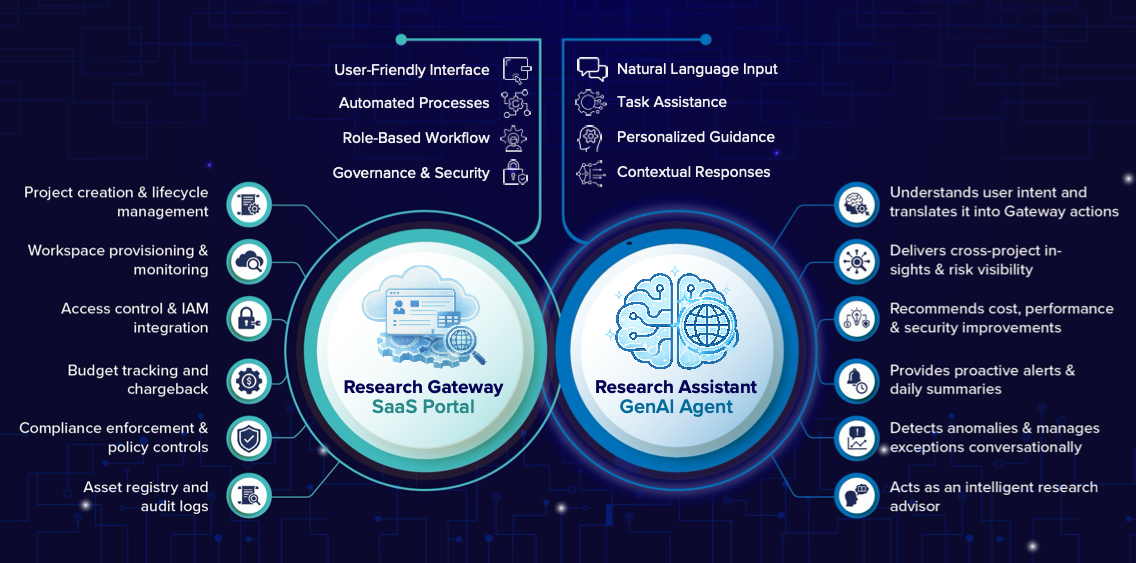
Impact: Faster research cycles, optimized compute utilization, stronger audit readiness.
See Research Assistant in action →
Ideal for research-focused higher education institutions, HPC environments, enterprise R&D teams, and regulated research ecosystems.
Sally – Clinical Trial Supply Chain Assistant
From Reactive Supply Management to Predictive Trial Intelligence
Clinical trials fail due to supply disruption, not science. Fragmented shipment, depot, and protocol data leads to reactive decisions and costly delays.
Sally embeds predictive intelligence into supply workflows with unified visibility, risk detection, and human-in-the-loop recommendations.
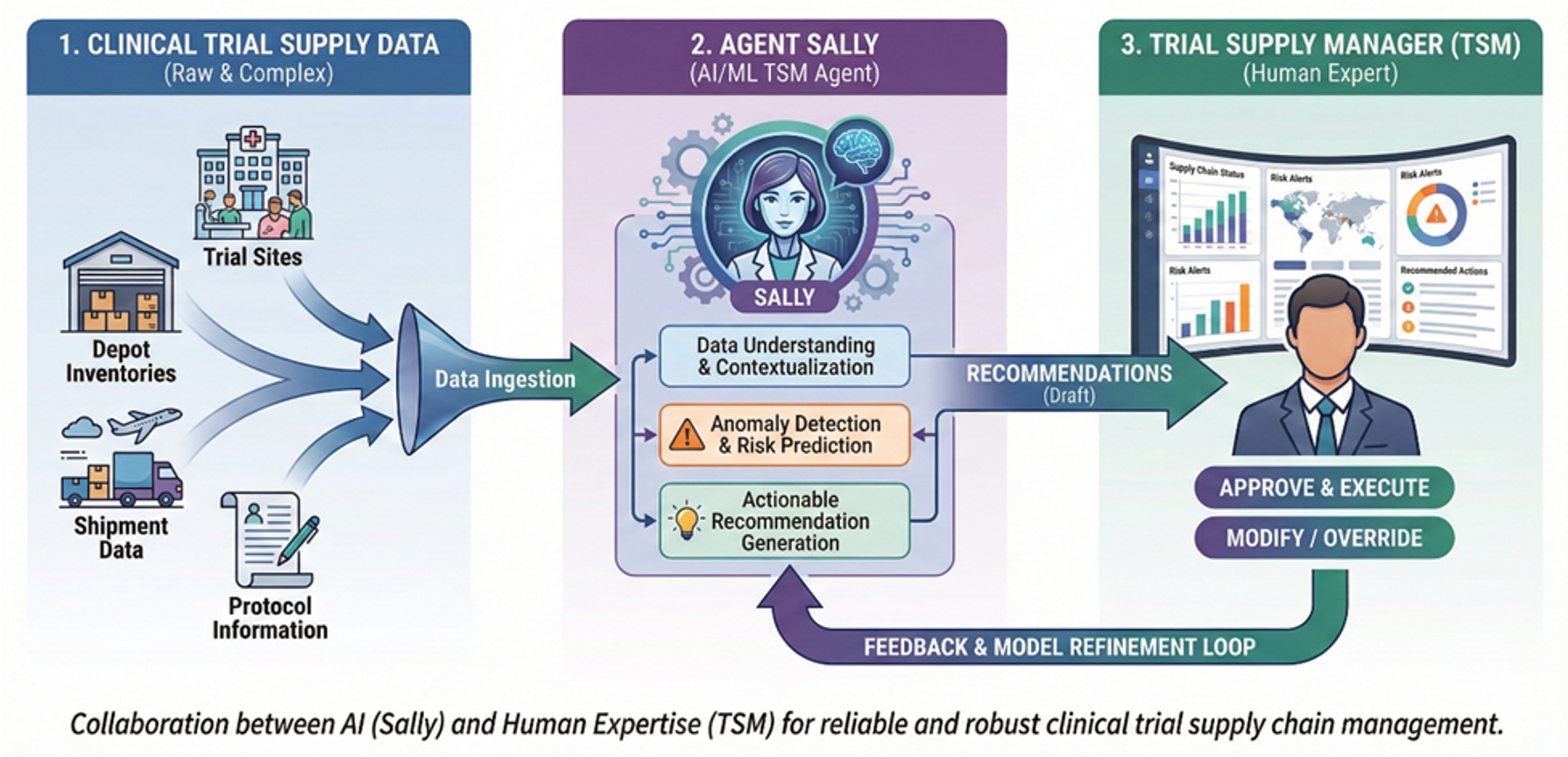
Impact: Reduced delays, improved supply planning, stronger governance across multi-site trials.
Ideal for clinical-stage pharma organizations, CROs, and life sciences supply chain teams.
IngestIQ – Data Intelligence Agent
From Schema Drift to Audit-Ready Intelligence
Enterprise pipelines break when data formats change. Rigid rule-based systems create reconciliation effort and compliance risk.
IngestIQ replaces static ingestion with adaptive, semantic intelligence — automatically mapping, transforming, and validating evolving data.
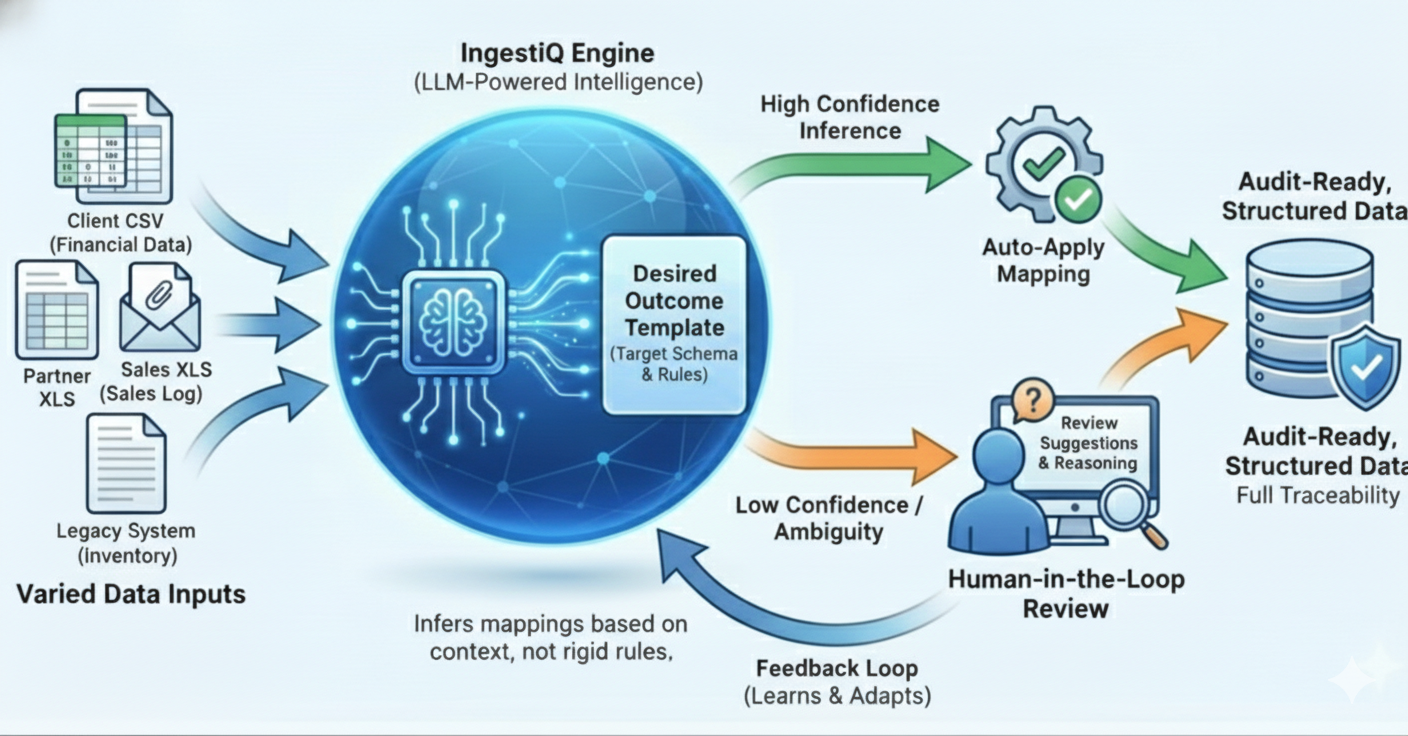
Impact: Lower reconciliation effort, faster reporting cycles, resilient audit traceability.
Ideal for financial services, regulatory reporting teams, and data-heavy enterprises managing dynamic third-party inputs.
Jasper – GenAI-Powered L1 SRE Agent
Autonomous Cloud Operations
SRE teams are overwhelmed by alert noise, manual triage, and repetitive remediation.
Jasper autonomously handles P3/P4 events, suppresses noise, accelerates root cause analysis, and escalates critical P1/P2 issues with human oversight.
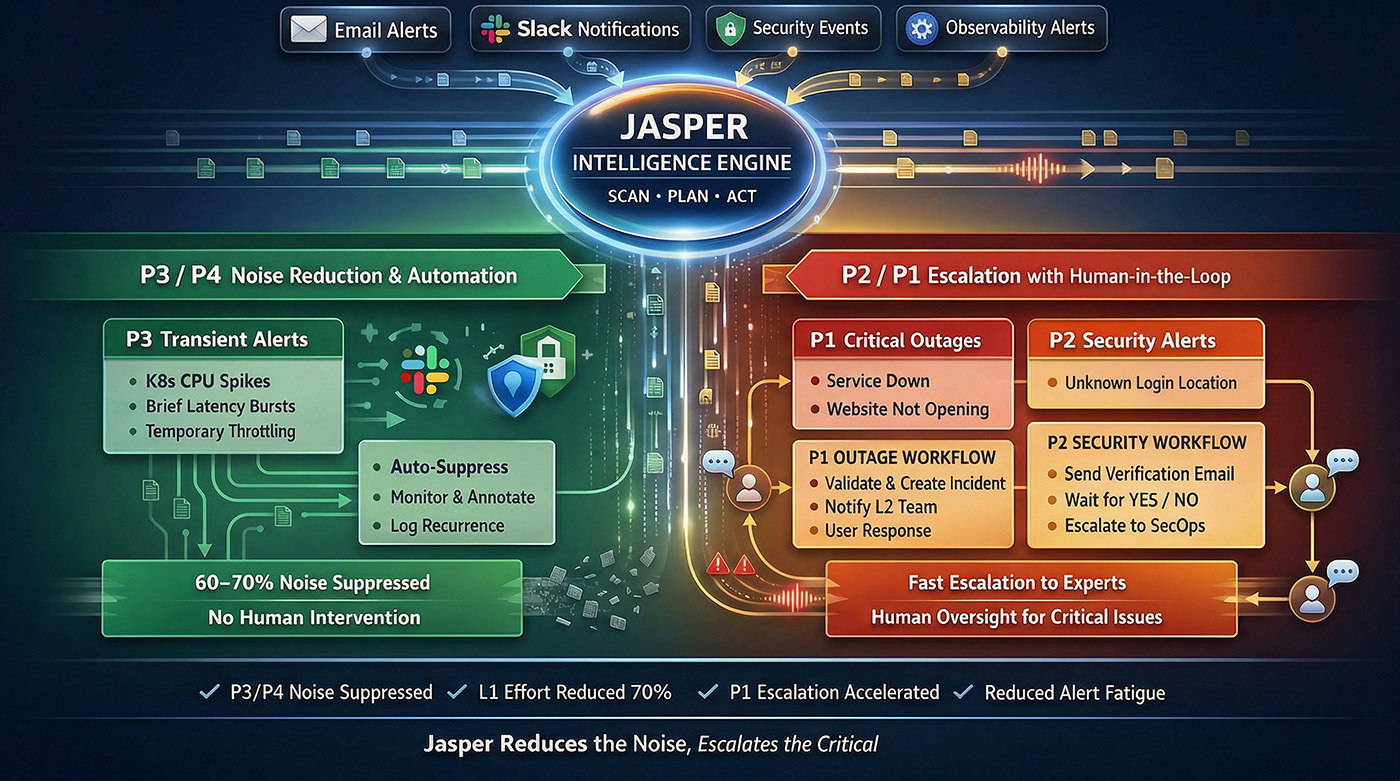
Impact: 50–80% reduction in L1 costs, 60–70% noise reduction, faster MTTR.
Ideal for SRE transformations, cloud-native platforms, high-alert production systems, and automation-driven IT operations.
GraphBridger – Knowledge Graph Driven Analytics Agent
From Dashboards to Contextual Reasoning
Traditional BI visualizes data but rarely explains relationships. Teams spend time reconciling entities and tracing dependencies manually.
GraphBridger – Knowledge Graph Driven Analytics Agent introduces semantic intelligence into enterprise data platforms. By grounding analytics in knowledge graphs, it connects entities, relationships, and intent — enabling deeper, context-aware insight generation beyond static dashboards.
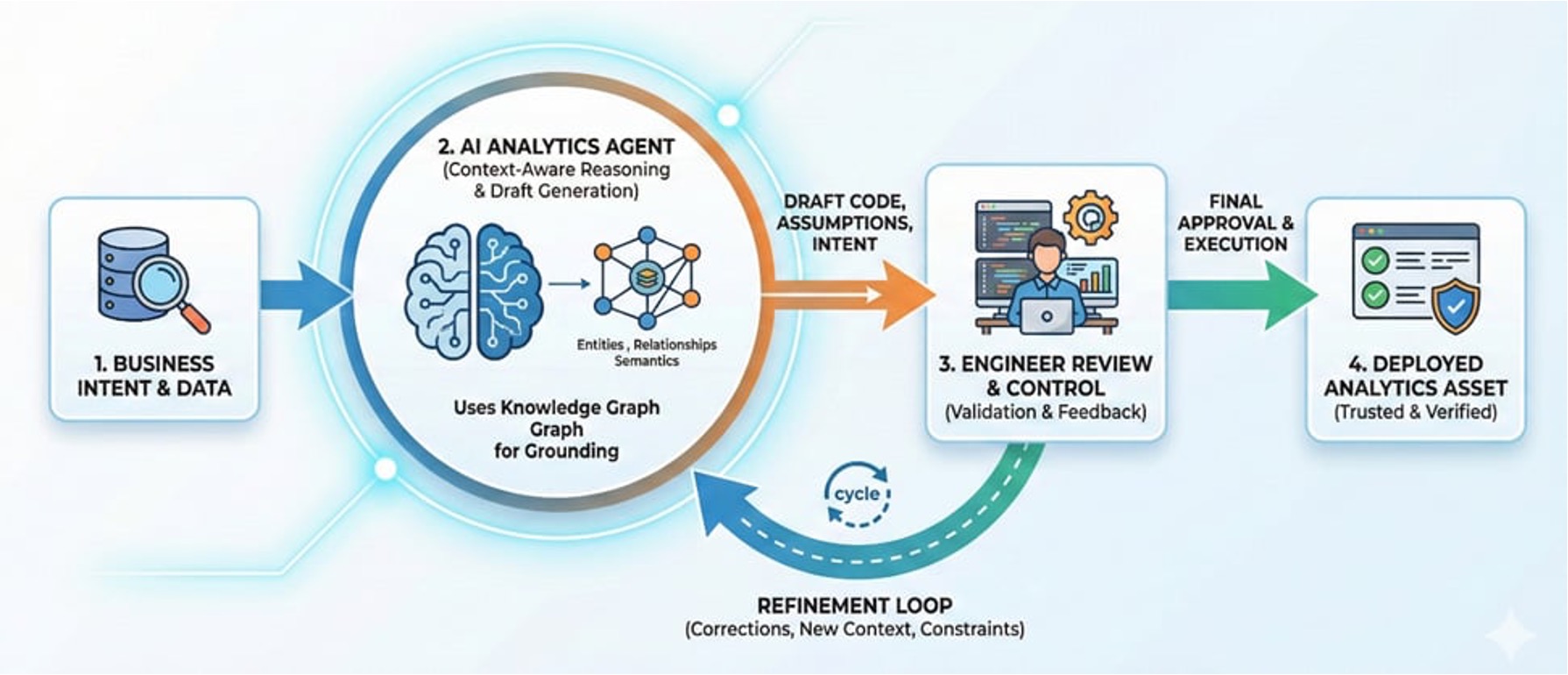
Impact: Faster decision-ready intelligence, reduced manual context discovery, stronger AI/ML foundations.
Ideal for enterprise data teams and fragmented data ecosystems, where the advantage lies not in more dashboards, but in contextual intelligence.
Clinical Trial Intelligence Agent (CTIA)
From Manual Narrative Authoring to Regulatory-Grade Intelligence
Clinical safety documentation requires synthesizing multi-source trial data into compliant, audit-ready narratives.
Clinical Trial Intelligence Agent (CTIA) is engineered for this complexity. It is an autonomous GenAI agent that generates protocol-compliant, audit-ready patient narratives and safety intelligence — while preserving regulatory control and traceability.
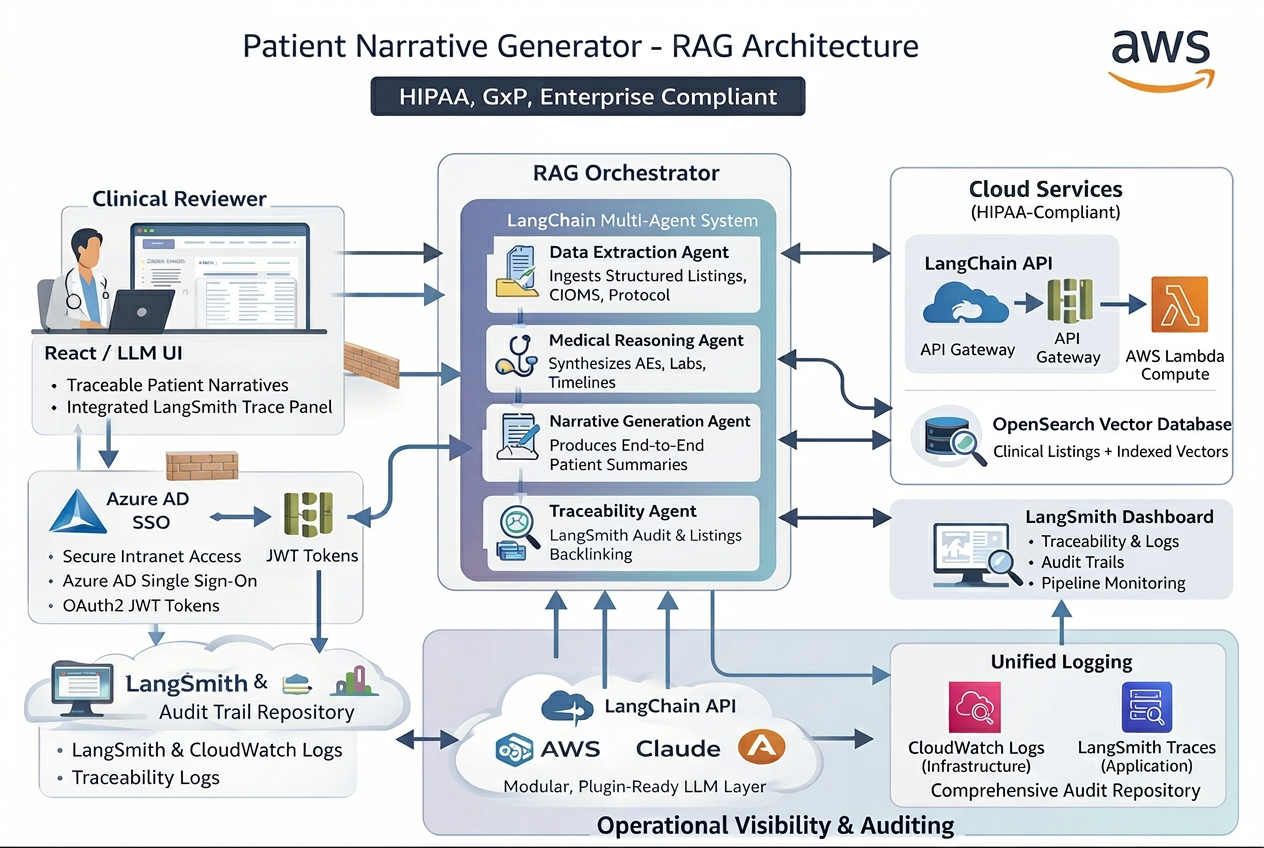
Impact: 60–80% reduction in authoring time, lower medical writing costs, submission-grade compliance.
Ideal for clinical development, pharmacovigilance, and regulatory teams — delivering governed, explainable intelligence at submission grade.
GenAI Remediation and Test Automation Agent
From Reactive Bug Fixing to Intelligent SDLC Acceleration
Engineering teams struggle with defect backlogs and manual remediation cycles. Speed without governance introduces risk.
The GenAI Remediation and Test Automation Agent is engineered to balance speed with governance. It embeds intelligence directly into the SDLC — scanning defects, planning remediation strategies, executing controlled fixes, and generating regression tests — all with mandatory human validation before deployment.

Impact: Reduced MTTR, faster releases, improved code quality, audit-ready traceability.
Ideal for product and platform teams, regulated SDLC environments, and DevOps modernization initiatives.
What Makes Relevance Lab Different
In a market dominated by horizontal AI copilots, we take a systems-first approach.
We don’t build chat interfaces.
We engineer domain-specific agents embedded inside enterprise platforms.
Our agents are:
- Production-ready
- Governed by design
- Human-in-the-loop
- Built for regulated and complex industries
Very few organizations combine deep software engineering, cloud-native architecture, data rigor, DevOps maturity, and regulated industry expertise.
That foundation allows us to build AI that is not experimental — but operational. Through our AI application development services, enterprises can turn domain-specific AI capabilities into production-ready applications integrated with their existing systems and workflows.
From Ambition to Embedded Intelligence
The next phase of enterprise AI will not be defined by more chat interfaces.
It will be defined by:
- Intelligence embedded in pipelines
- AI-driven compliance workflows
- Autonomous — yet governed — cloud operations
- Reasoning-driven data platforms
- Cognitive automation across research ecosystems
This is the shift from experimentation to integration — from productivity tools to operational intelligence, from isolated AI pilots to embedded enterprise systems.
That is the Agentic Enterprise. LLM application development services extend this approach by integrating model-powered search, assistants, and workflows into existing enterprise systems.
And that is what Relevance Lab is building.